The roots of racing simulators can be traced back to the arcade era of the 1960s and 70s. Back then, the machines were primitive, featuring basic tracks and simple steering wheel controls. As technology advanced, these simulators became increasingly sophisticated and lifelike.
The integration of advanced graphics and sound technology allowed simulators to render realistic racing environments, offering players a truly immersive experience. Over time, development has only accelerated. Manufacturers have consistently pushed the envelope, transitioning from simple arcade modes to the highly realistic driving simulations we see today. Now, racing simulators stand as a pinnacle of arcade entertainment, drawing in countless car enthusiasts and gamers alike.
Currently, many manufacturers produce racing simulators, but two Japanese giants—SEGA and Namco—stand out as the most influential leaders in the field. Their products have made significant breakthroughs in both technology and gameplay, delivering extraordinary experiences to players.
SEGA: Their legacy is defined by iconic series like SEGA Rally Championship and Initial D Arcade Stage. SEGA Rally combines realistic racing elements with a vibrant art style, challenging players across diverse terrains. Meanwhile, Initial D Arcade Stage, based on the famous anime, allows players to drive classic modified cars and experience the thrill of high-speed drifting on mountain passes.
Namco: This powerhouse is best known for the Ridge Racer and Wangan Midnight Maximum Tune (Maxi Tune) series. Ridge Racer focuses on the thrill of street racing on visually stunning tracks. Maxi Tune has become an iconic competitive title where players use personal IDs to save their progress and challenge others to claim the title of “King of the Road.”
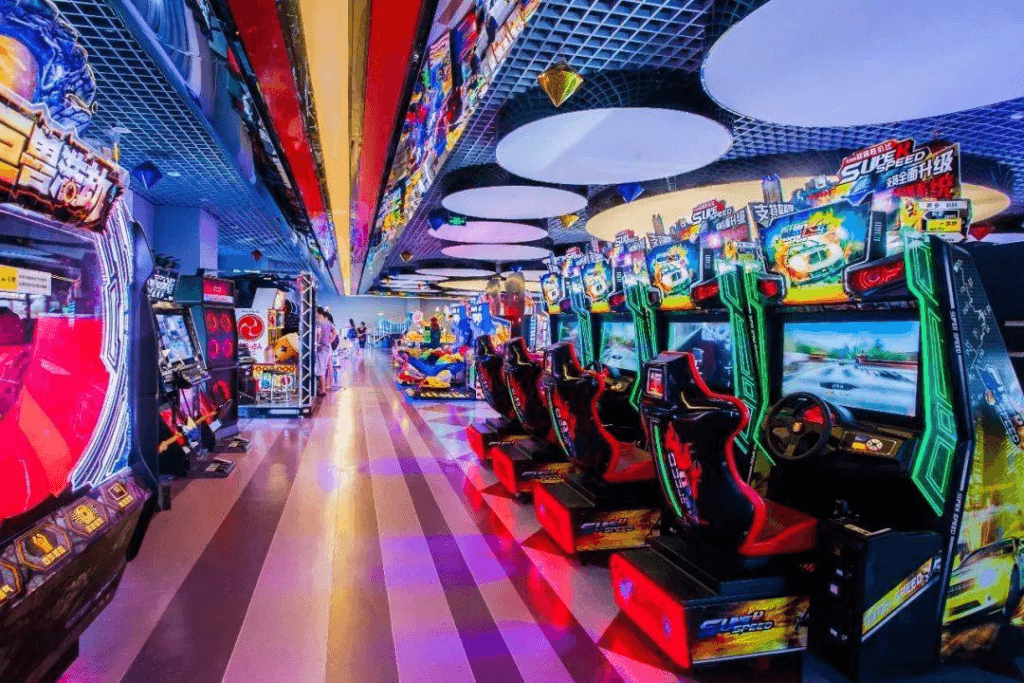
For any modern arcade, racing simulators are an indispensable component. These machines are typically clustered together to form a dedicated Racing Game Zone. This area is often designed with a “cool” aesthetic, featuring ergonomic racing seats, realistic dashboards, and high-fidelity sound systems to enhance the sense of realism.
In these zones, multiple machines are usually lined up side-by-side, allowing friends to go head-to-head and showcase their driving skills. You will often find these areas buzzing with energy and excitement as players immerse themselves in the unique, adrenaline-pumping world of high-performance racing.
Arcade racing simulators, represented by SEGA and Namco, are essentially arcade video games in terms of their product hardware and software composition. In terms of game software, they lean toward standalone modes; manufacturers focus on exaggerated special effects processing and item-based race interaction. In terms of hardware, they run software programs on microcontroller mainboards and are only compatible with racing games developed by the manufacturers themselves. The motion systems use pneumatic and hydraulic cylinders, which have lower control precision than electric cylinders and are complex in system design. Usually, they cannot provide feedback on the racing car’s steering dynamics or road feel feedback, etc.
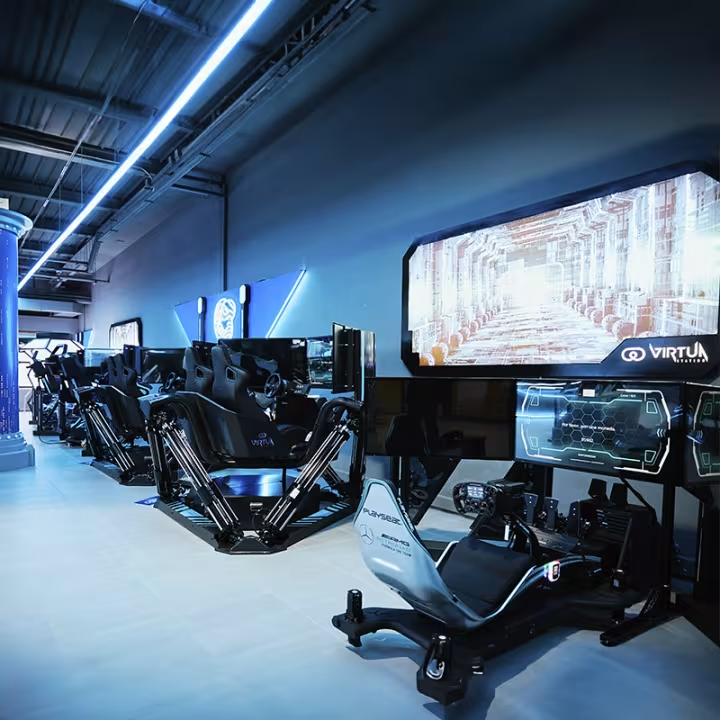
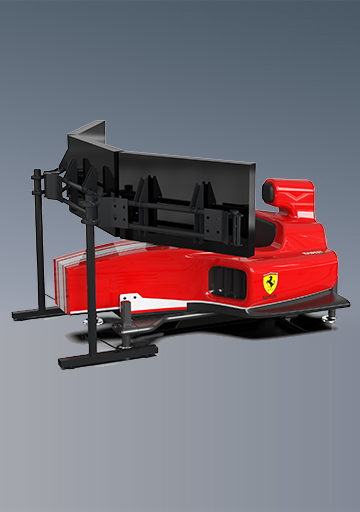
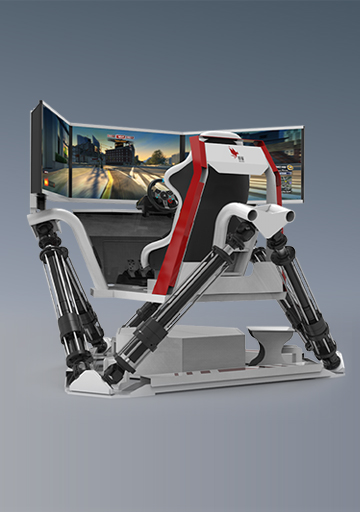
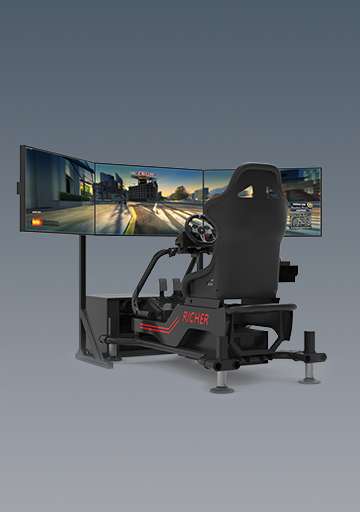
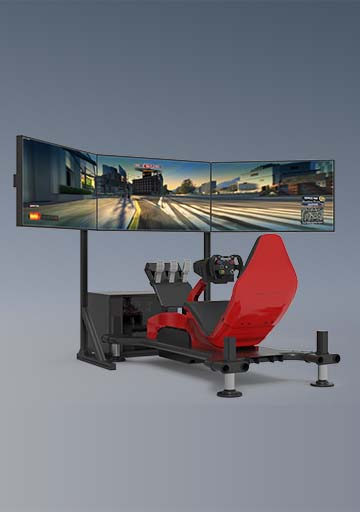
On the other hand, another type, the professional-grade racing simulator, has a very large difference. This kind of simulator uses a computer host, and the game software is a PC program developed based on Windows; the power system uses a more precise servo motor system reaching millisecond levels. The mainstream computer racing games include F1 2024, DIRT3, DIRT RALLY, Assetto Corsa, rFactor, FORZA 5, etc., which include many AAA titles. These games are usually developed and maintained with huge capital investment from top game companies. In the early stages, this kind of motion simulation system was applied in professional fields such as aerospace training, racing driver training, and military training. With the technological development of electric servo systems and the decline in industry costs, it has gradually filtered down to the amusement industry. Therefore, modern game halls can also place these high-level, professional racing simulators.
Nowadays, simulator technology is already quite mature; it can provide 95% of the feedback effects of a real racing car. It can accurately simulate the testing environment, ground temperature, tire temperature, humidity, wind speed, and other factors. Furthermore, it provides an excellent way for beginners and advanced players to better understand basic racing driving principles and driving techniques, helping to cultivate more refined driving skills. Many karting enthusiasts and racing enthusiasts also like to train on simulators, so that they can better familiarize themselves with track characteristics and car performance. More importantly, they can temper their emotional stability and concentration during races, keep a clear mind, stay focused, and be ready at any time to respond to emergencies, gradually improving their driving skills and experience.